Poly-B plumbing is one of the most common questions I receive from homebuyers and homeowners in British Columbia. While having Poly-B plumbing doesn't automatically mean you can't get home insurance, it can affect your insurance options, premiums, deductibles, and water damage coverage. Here's what every homeowner should know.
What is Poly-B Plumbing?
Poly-B (polybutylene) is a flexible plastic water supply pipe that was commonly installed in Canadian homes from the late 1970s through the mid-1990s. At the time, it was considered an affordable and cost-effective alternative to copper plumbing and was widely used in residential construction.
Over time, however, some Poly-B systems experienced premature failures and leaks. While many homes continue to have Poly-B plumbing without issue, insurers recognize that these systems have historically resulted in a higher number of water damage claims than other plumbing materials.
That doesn't mean a home with Poly-B can't be insured, it simply means insurers may evaluate it differently.
How Can I Tell if I Have Poly-B?
Poly-B (polybutylene) plumbing is most commonly grey, although some installations may be blue or black, depending on the manufacturer. Because of this, colour alone isn't enough to identify Poly-B plumbing.
The easiest way to confirm whether you have Poly-B is to look for "PB2110" stamped or printed on the pipe. This marking is the most reliable way to identify Poly-B.
Poly-B plumbing is commonly found in:
Near the hot water tank
Under sinks
Unfinished basements
Crawl spaces
Utility rooms
Exposed ceiling joists
Tip: Many homeowners assume they have Poly-B because their plumbing is grey. However, not all grey plumbing is Poly-B. Always look for the PB2110 marking to confirm the material.
Don't Confuse Poly-B with PEX or PVC
Several types of plastic plumbing have been used in homes over the years. While they may look similar, they are different materials with different characteristics.
Poly-B (Polybutylene): A flexible plastic water supply pipe commonly installed in homes built between the late 1970s and the mid-1990s. It is the primary plumbing material discussed in this article.
PEX (Cross-linked Polyethylene): A newer flexible plumbing material that is commonly red, blue, or white. PEX has become the standard replacement for Poly-B and is widely accepted by home insurance companies.
PVC (Polyvinyl Chloride): A rigid white or black plastic pipe most commonly used for drain, waste, and vent (DWV) systems. CPVC (Chlorinated Polyvinyl Chloride) is a similar material designed for hot and cold water supply lines.
If you're purchasing a home, a professional home inspection will usually identify whether Poly-B plumbing is present.
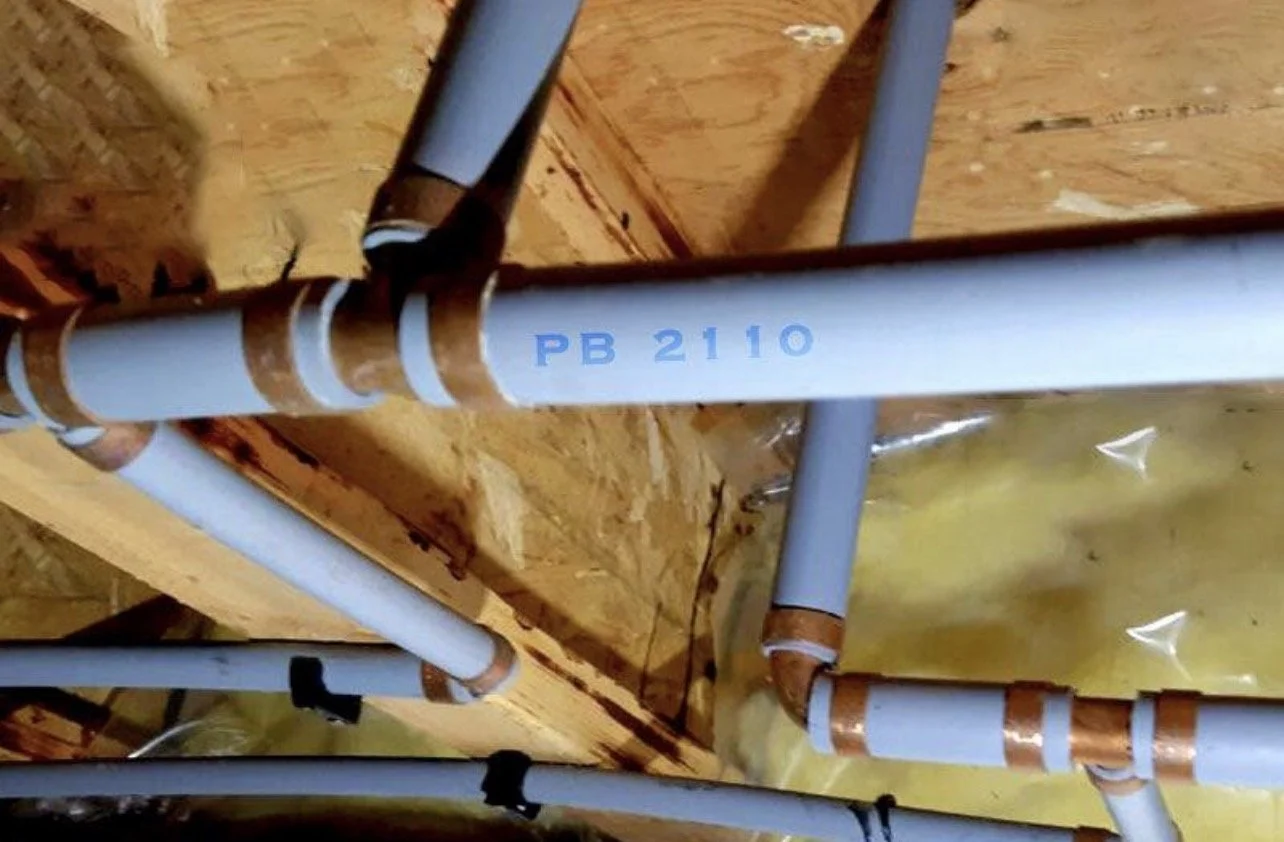
Example of grey Poly-B plumbing marked "PB2110" with updated copper fittings and connectors.
Why Does Poly-B Matter for Insurance?
Insurance companies evaluate the likelihood of future claims. Because Poly-B plumbing has experienced a higher frequency of water damage claims over the years, many insurers have developed underwriting guidelines specifically for homes that contain it.
These guidelines vary between insurance companies.
Depending on the insurer, they may:
Offer standard coverage with no restrictions.
Require updated fittings before offering coverage.
Apply a premium surcharge.
Increase your water damage deductible.
Ask additional underwriting questions.
Require the plumbing to be replaced before providing coverage.
Every insurance company has different underwriting rules, so it's important not to assume that one company's decision reflects the entire insurance market.
Updated Copper Fittings Can Make a Difference
One of the first questions many insurers ask is whether the original Poly-B fittings have been replaced.
Many older Poly-B systems were installed using plastic (acetal) fittings, which have been associated with a higher risk of leaks. Because of this, many insurers now prefer, or require, that these fittings be replaced with copper or brass fittings and connectors before they will offer coverage.
Upgrading the fittings can improve your insurance options and may satisfy an insurer's underwriting requirements. However, it's important to understand that the home is still considered to have Poly-B plumbing.
Even with updated fittings, some insurers may still:
Apply a premium surcharge.
Require a higher water damage deductible.
Ask additional underwriting questions.
Recommend future replacement of the plumbing system.
Updated fittings improve eligibility, but they don't necessarily remove every underwriting restriction.
Can I Still Get Home Insurance?
In most cases, yes.
Many homes with Poly-B plumbing remain fully insurable in British Columbia. However, the terms of coverage can vary depending on the insurance company.
Some homeowners may experience:
Higher insurance premiums
Water damage surcharges
Increased water damage deductibles
Additional underwriting questions
Requirements for updated fittings
Recommendations to replace the plumbing in the future
Because every insurer has different guidelines, shopping around can make a significant difference.
Should You Replace Poly-B?
There isn't one answer that fits every home.
Some homeowners choose to replace Poly-B plumbing proactively, particularly if:
The plumbing is original.
They've experienced previous leaks.
They're already renovating.
They want access to more insurance options.
They want to reduce the risk of future water damage.
Others continue to insure homes with properly maintained Poly-B plumbing for many years without experiencing problems.
If you're unsure whether replacement makes sense, it's worth discussing both the condition of your plumbing and the insurance implications with qualified professionals.
Buying a Home with Poly-B?
If you're purchasing a home with Poly-B plumbing, don't wait until the day before possession to arrange your insurance.
Your insurance broker may need to know:
Whether the fittings have been updated.
If there have been previous leaks or water damage claims.
The approximate age of the plumbing.
Information from the home inspection.
Providing this information early helps avoid last-minute surprises and gives your broker more time to compare insurance options.
The Bottom Line
Poly-B plumbing doesn't automatically mean your home is uninsurable. However, it can affect your insurance premiums, deductibles, water damage coverage, and the insurers available to you.
Because every insurance company has different underwriting guidelines, it's important to compare your options rather than assuming every insurer will treat your home the same way.
If you're buying a home with Poly-B plumbing or renewing your insurance, speaking with an independent insurance broker can help you understand your options and find coverage that's right for your home.
Frequently Asked Questions
What is Poly-B plumbing?
Poly-B (polybutylene) plumbing is a grey plastic water supply pipe that was commonly installed in Canadian homes from the late 1970s through the mid-1990s. While many systems continue to perform well, Poly-B has been associated with a higher risk of leaks and water damage than modern plumbing materials. As a result, many home insurers have special underwriting requirements for homes with Poly-B plumbing.
How can I tell if my home has Poly-B plumbing?
Poly-B plumbing is usually grey in colour and often has "PB2110" stamped on the pipe. It is commonly found near the hot water tank, under sinks, in unfinished basements, crawl spaces, or utility rooms.
If you're unsure, a qualified plumber can inspect your home's plumbing and confirm whether Poly-B is present.
Are homes with Poly-B plumbing still insurable in BC?
Yes. Many insurance companies in British Columbia will still insure homes with Poly-B plumbing. However, eligibility, premiums, and coverage conditions vary by insurer. Some companies insure Poly-B with no additional requirements, while others require upgrades before offering coverage.
Why do some insurance companies charge more for Poly-B plumbing?
Because Poly-B plumbing has historically generated more water damage claims than newer plumbing systems, some insurers view it as a higher risk. Depending on the insurer, this may result in:
A higher premium
A water damage surcharge
A higher water damage deductible
Requirements to replace certain fittings or the entire plumbing system
What are copper fittings and why do insurers care?
Many older Poly-B systems were installed with plastic or acetal fittings, which have been linked to failures. Some insurers require these fittings to be replaced with copper or brass fittings to reduce the risk of leaks and water damage.
If your home has already been upgraded with copper fittings, it may improve your insurance options.
Should I replace Poly-B plumbing?
Not necessarily. Many Poly-B systems continue to perform without issues. However, if your plumbing is older, has experienced leaks, or still has original plastic fittings, replacing it may reduce the risk of future water damage and make it easier to obtain favourable insurance coverage.
A licensed plumber can help determine whether replacement is recommended for your home.
Will replacing Poly-B lower my insurance premium?
It can. Some insurers offer better pricing or remove Poly-B surcharges once the plumbing has been fully replaced. Others may simply provide access to more coverage options. Every insurer has different underwriting guidelines.
Does every insurance company have the same rules for Poly-B?
No. Each insurance company has its own underwriting guidelines. Some insurers are more flexible than others, and requirements can change over time. This is one of the benefits of working with an independent insurance broker who can compare multiple insurers.
Need Insurance Advice?
Insurance information is a great starting point, but every person, family, home, and business has unique insurance needs.
If you have questions about your current coverage, are approaching your renewal, or simply want a second opinion, I'd be happy to help you understand your options and determine whether your coverage still meets your needs.
I work with multiple insurance companies to help clients find coverage that fits their situation, not just the lowest price.
📍 Proudly serving Langley, the Fraser Valley, Metro Vancouver, and clients throughout British Columbia and Alberta.
About the Author
James Kramer is an independent insurance advisor with more than a decade of experience helping individuals, families, and business owners protect what matters most.
He provides general insurance, including Home, Auto, ICBC Autoplan, Business, Travel, and Specialty Insurance, throughout British Columbia and Alberta, as well as independent life insurance solutions across British Columbia.
Through the Insurance Learning Centre, James shares practical insurance advice, explains common coverage questions, and helps Canadians better understand their insurance so they can make informed decisions with confidence.
Disclaimer
The information provided in this article is intended for general informational purposes only and should not be considered insurance, legal, or financial advice.
Insurance products, policy wordings, coverage options, eligibility, and availability vary by insurer and province. Always review your own policy and consult a licensed insurance advisor regarding your specific circumstances before making insurance decisions.